
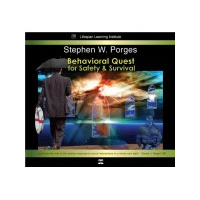
Description
Dr. Porges illustrates the strong relationship between the physiological state and behaviour and explores the implications of the Polyvagal Theory and the Love Code for clinical practice. Illuminating how our nervous system influences and is influenced by our interactions with others. This program provides an understanding of the Polyvagal Theory – the neural mechanisms that mediate physiological states of safety (social engagement), mobilized defence (danger), and immobilized defence (life threat). Porges also discusses features of the Social Engagement System, revealing a face-heart connection, which enables social engagement behaviours and appropriate social support to promote mental and physical health.
Objectives:
- Differentiate between regulatory strategies, such as auto-, self-, external, and interactive regulation.
- Identify particular arousal bias in individuals and couples.
- Apply at least three bottom-up methods for working with arousal dysregulation.
- Identify personality disorders, based on a two-axis level of attachment organization and arousal predilection.
Specifications:
| format | mp4 video |
| Presenter(s) | Stan Tatkin, PhD |
| Series | Annual IPNB |
| Time | 63 minutes |
| Year | 2014 |

There are no reviews yet.